
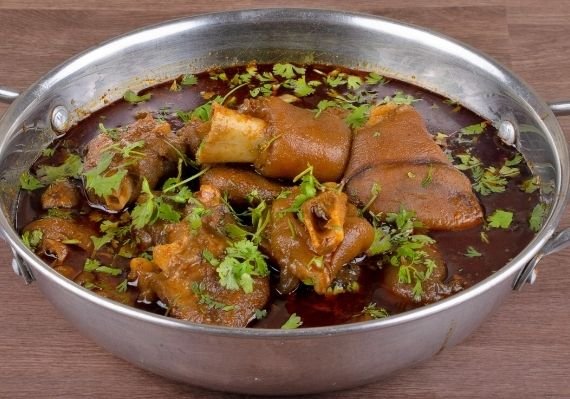
Saoji Chicken Masala
Saoji special
Halba Kosti Tribes from Madhaya Pradesh, who are weavers by professions came to Vidharba region of Maharastra Nagpur and settled there. They settled in large numbers and took up job at Empress Mill. They introduced Saoji Cuisine, their cuisine is fiery hot and spicy that needs an acquired taste. It’s the unique spice blend that makes the difference, it’s is slow cooked and linseed oil is used in the authentic recipe.
Each house adds their twist to the spices. The recipes are closed guarded secret to each family. In 70s the first Saoji joint was opened in Nagpur, there after now many restaurants have opened selling Saoji Cuisine. They are mainly non vegetarian having mutton, chicken, fish. The cuisine is now known to the world by word of mouth.
Ingredients
For Saoji Masala
• 2 tbsp Coriander seeds
• 1 tsp Cumin seeds
• 1 tsp Shahi Jeera
• 8 Dry Red Patna Chillies
• 8 to 10 Black pepper corns
• 1 inch Cinnamon stick
• 1 Black Cardamom
• 4 Green Cardamom
• 4 Cloves
• 1/2 Nutmeg
• 1 Star Anise
• 1 tsp Dagad Phool / Stone Flower
• 1/4 piece Nutmeg 2 Bay leaves
• 1 tsp Poppy Seeds or White Sesame Seeds
• 1 tsp Rice
• 2 tbsp Dry Grated Coconut / Dessicated coconut
• 1/2 tbsp Chana Dal/ Split Chickpeas
• 3 Bay leaves
Method
Take a pan, on a low heat stir and roast Coriander seeds, Split Chickpeas, Rice, Cumin seeds, poppyseeds or sesame seeds, cinnamon, cloves, black and green cardamom, nutmeg, star anise, pepper, bay leaves, stone flower, whole red chillies and dry grated coconut . Roast until you get an aroma out of the spices. Cool the spices down and then grind the spices into a powder.
To make the Saoji Chicken
• 1 kg County Chicken / Gavti Murgi / Komdi cut into pieces
• 2 Onions sliced
• 1 tsp Garlic paste
• 1 tsp Ginger paste
• Few Coriander leaves chopped
• 2 Bay leaves
• 1 tsp Turmeric powder
• 1 tsp Spicy Chilli powder
• 3 tbsp of the Saoji Masala
• Salt to taste
• 1/2 cup Oil
Method
Take a pan, add a tbsp oil, fry the onion until brown, cool it down and make a paste with little water. Take the saoji masala, add little water and make a paste.
Take a pot, add oil, add bay leaves, add ginger and garlic paste, sauté for few seconds. Add the fried onion paste, sauté for a minute, add few chopped coriander leaves, turmeric powder, chilli powder, Saoji masala paste, chicken and salt. Stir and cook the ingredients on a low flame. Cover the pot and cook for 5 minutes. Open the lid, now add a cup of water. Stir, cover and let it cook for another 15 minutes. Open the lid, add 2 cups of water, close the lid and cook until the chicken has cooked. Garnish with chopped coriander. Serve the chicken with Roti, bhakri or rice.
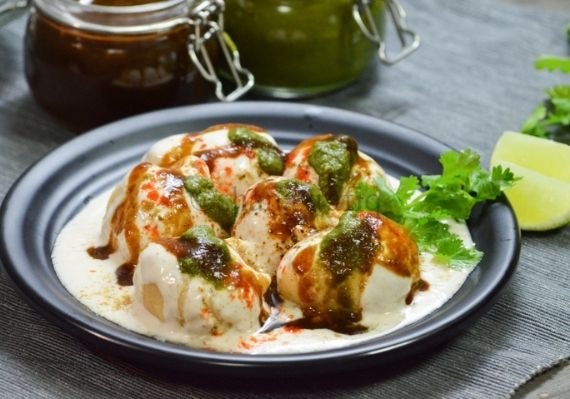
Black Eyed Peas Dahi Vada
vegan & non fried
Black eyed peas (लोबिया / चवळी ) is a popular legume used widely in Indian cuisine. This Black-Eyed Peas Dahi Vada is a non fried snack with non diary curd.
Being an excellent source of complex carbs, fibre and many essential vitamins and minerals and so full of good nutrition they’re both a protein food and a vegetable. Interestingly, some cultures consider black-eyed pea consumption a sure way to start off a prosperous and good luck-filled new year. So, they are not only healthy, they are lucky too.
• Prep Time5 mins
• Cook Time20 mins
• Soaking time4 hrs
• Total Time4 hrs 25 mins
• Course: Main Course, Snack
• Cuisine: Indian
• Keyword: Black-eyed peas, lobia, Chawli, karamani, dahi vada, Peanut
curd.
• Servings: 12 vadas
• Author: Rama G
Ingredients
• ½ cup Black eyed peas
• 2 tbsp Channa dal
• 2 to 3 green chillies
• 1 piece ginger
• Salt to taste
• 1 cup peanut curd (dairy curd for non-vegans)
• 1 tsp chaat masala
• 1 tsp salt for Dahi
Instructions
1. Soak black eyed peas and channa dal together for 4 hrs.
2. Grind to a coarse paste adding green chilli and ginger.
3. Try to grind without adding water. If you find it difficult, just add
1 tbsp water.
4. Make lemon sized balls.
5. Heat an Appe pan (appam pan), place the balls, cover and cook them on
slow fire.
6. Keep turning till all sides brown equally.
7. In the meantime, beat the peanut curd with chaat masala and salt.
Notes
Pour over the vadas and garnish with chilli powder & coriander.

Tarri Poha
Tarri Poha is a speciality of Vidarbha region in Maharashtra, more specifically Nagpur. There are bandis/kiosks that open early in the morning and have a hard time catering to the long queues of customers desperate to begin their day with this hot, lip-smacking, yummy snack made of flattened rice and desi chana.
The tarri is a watery, very spicy preparation of desi chana that's served liberally with "kanda poha" and garnished with onions, tomatoes and sev. One may not be surprised if the blood test of a true Nagpurian reveals presence of blood and tarri in equal proportions.
• Prep Time :10 mins
• Cook Time: 30 mins
• Soaking Time for Chana :4 hrs
Equipment
• Pressure Cooker
• Wok
Ingredients
For the Kanda Poha
• 1 Cup Thick Poha, Jada Poha
• 1/2 Cup Finely Chopped Onion
• 1/4 tsp Turmeric
• 1/2 tsp Mustard Seeds
• 1/2 tsp Cumin Seeds
• 1/4 tsp Sugar
• 2 Green Chillies
• 1 Pinch Asafoetida
• 1 tbsp Oil
• A Few Curry Leaves
• Salt to Taste
For the Tarri
• 1/4 Cup Chana, Black Chickpeas
• 1/2 Cup Finely Chopped Onion (Or 1/3 cup Onion Paste)
• 1 Large Tomato, Cut into Quarters or Halves
• 1 tsp Kala Masala (or Chana Masala)
• 1/2 tsp Chilli Powder (Adjust according to spice level)
• 1/2 tsp Turmeric Powder
• 1/2 tsp Coriander Powder
• 3 Cloves
• 1 Bay Leaf
• 3-4 Pepper corns
• 1/2 tsp Grated Ginger
• 1/2 tsp Garlic Paste
• 1 Pea-sized ball of jaggery
• 1 Pinch Asafoetida
• 1/2 tsp Mustard Seeds
• 1/2 tsp Cumin Seeds
• 1 tbsp Oil
• A Few Curry Leaves
• Salt to Taste
Other Ingredients
• 1/2 Cup Nylon Sev, Thin Sev
• 4 Lemon Wedges
Instructions
Making the Kanda Pohe
1. Add the poha to a colander, and wash them well under a gentle stream
of running water for 1 or 2 minutes. Keep mixing the poha with a gentle
hand so that all flakes are wet.
2. Set aside to drain completely for 10 minutes.
3. In a wok, over medium fame, heat the oil.
4. Add mustard seeds and wait till they crackle.
5. Add cumin seeds and stir-fry for a few seconds.
6. Add the chopped onion and green chillies, and stir-fry till the
onions turn translucent.
7. Add curry leaves, sugar, salt, turmeric, and asafoetida. Mix
well.
8. Add the washed and drained poha, and mix well.
9. Set aside.
Making the Tarri
1. Soak the chana in 1/2 cup water for at least 4 hours.
2. Drain all the water, add 3/4 cup fresh water and pressure cook till
the chana is soft.
3. In a kadhai, heat 1 tbsp oil.
4. Add mustard and cumin seeds, and stir-fry till the mustard seeds
start to crackle.
5. Add the bay leaf, pepper and cloves. Stir-fry for a few seconds.
6. Add the ginger and garlic, and stir-fry for a few seconds.
7. Add the chopped onion and curry leaves. Stir-fry till the onion turns
translucent.
8. Add the turmeric, kala masala/chana masala, chilli powder, coriander
powder, jaggery, salt, and asafoetida. Stir-fry for a few seconds.
9. Add the boiled chana with the water it was cooked in.
10. Add the tomato pieces.
11. Bring the Tarri to a boil.
Serving the Tarri Poha
1. To a deep plate, add 1/4 portion of poha.
2. Pour some Tarri over it. Ensure everyone gets a piece of tomato.
3. Sprinkle some sev over the poha.
4. Serve immediately with a wedge of lemon on the side.
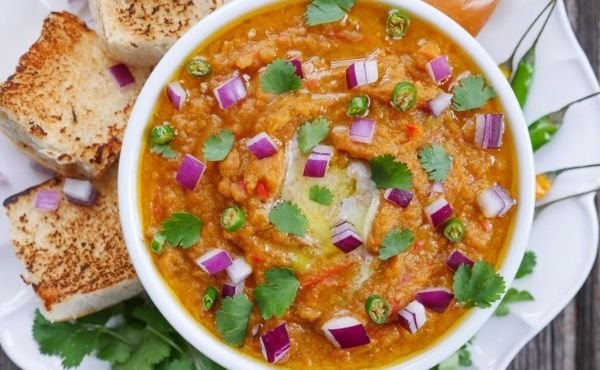
Pav Bhaji
Mumbai Street Style Recipe
This Mumbai style pav bhaji is super delicious to taste and similar to the pav bhaji one gets in Mumbai. Pav bhaji is an iconic dish from Mumbai and hugely popular all over India. Pav means bread rolls.
Bhaji is the marathi word for vegetables or a vegetable based dish (dry or gravy). Since both the bhaji (vegetable gravy) and pav are served together, hence the name 'Pav bhaji'.
Pav bhaji is basically a mix of mashed & spiced vegetables in a gravy. A special spice blend 'Pav Bhaji Masala' is used to make pav bhaji.
Pav bhaji masala powder is easily available in Indian stores and can be easily made at home too. Though homemade spice blends are always good, but you can make pav bhaji with your favorite brand of pav bhaji masala.
Pav bhaji originated in Mumbai as a quick lunch option for textile mill workers. Gradually this dish becomes so popular that now it is served as street food as well as in restaurants in Mumbai and the rest of India.
Ingredients
For the Bhaji
• 2 large potatoes 385 grams, boiled
• 1/2 head of a small cauliflower 215 grams, boiled
• 1/2 of a large green pepper 135 grams, boiled
• 1/2 cup frozen green peas boiled
• 1 tablespoon vegetable oil
• 3 tablespoons butter unsalted, divided
• 1 teaspoon cumin seeds
• 2 medium red onion 230 grams, finely chopped
• 2 inch ginger 24 grams, finely chopped
• 7 cloves garlic 20 grams, finely chopped
• 2 green chilies finely chopped, adjust to taste
• 3 large tomatoes 425 grams, finely chopped
• 1/3 cup tomato puree store bought
• 1.25 teaspoon salt divided
• 1.25 cups water divided
• 1 tablespoon + 1 teaspoon pav bhaji masala or to taste
• 1/2 teaspoon red chili powder or to taste
• 2 teaspoons kasuri methi also known as dried fenugreek leaves
• 3 tablespoons chopped cilantro
• Juice of 1 large lemon
For the Pav
• 12-14 pav eggless dinner rolls
• Butter to toast the pav
• Pav bhaji masala to sprinkle
Instructions
Make the Bhaji
1. Boil the veggies first and keep them ready. I used my pressure cooker
to boil them until they were soft and tender.
2. Heat 1 tablespoon of butter and 1 tablespoon of oil in a large pot on
medium heat. Once the butter melts and oil is hot, add the cumin seeds
and let them sizzle.
3. Add the chopped onions and mix. I like to use my food processor to
chop them really fine.
4. Cook the onions for around 4 minutes until golden brown in color.
5. Add the finely chopped ginger, garlic and green chili. Again, I used
my food processor to chop them really fine. Cook the ginger-garlic-green
chili for 1 minute.
6. Add chopped tomatoes and mix well. Let the tomatoes cook for 2
minutes.
7. Add store bought tomato puree, 1/4 cup water and 1/4 teaspoon salt.
Cover the pan and let the tomato cook for 6 minutes until softened and
completely cooked.
8. Add the pav bhaji masala, red chili powder and remaining 1 teaspoon
of salt. You may also add 1/2 teaspoon of sugar here (optional).
9. Mix well and then add in 2 teaspoons of kasuri methi (dried fenugreek
leaves).
10. Stir in the boiled veggies and mix. Using a potato masher, mash the
veggies until they are completely mixed with the masala.
11. Add the remaining 3/4 - 1 cup water and mix. I used an immersion
blender to blend the veggies to a paste like consistency at this point
but this is optional. You may keep them as such.
12. Cover the pot and set heat to low. Let the bhaji simmer on low heat
for 15 minutes.
13. Open the pot and add in the remaining 2 tablespoons of butter.
14. Add a generous amount of chopped cilantro.
15. Then add in juice of 1 large lemon. Let the bhaji simmer for 2 more
minutes and then remove pan from heat.
Toast the Pav
1. To toast the pav, melt butter on a pan on medium heat. Sprinkle some
pav bhaji masala on top of the butter and then place the buns on the
pan.
2. Press to toast the pav until crisp and golden brown from both sides.
Serve the Pav Bhaji
1. To serve the pav bhaji, place ladle full of bhaji in a plate. Top the bhaji with a dollop of butter. Serve with 2 pavs and a side of chopped onions and a lemon wedge.
Notes
1. You may add kashmiri red chili powder/degi mirch to get that bright
red color in your bhaji!
2. To make it vegan, replace butter with vegan butter.
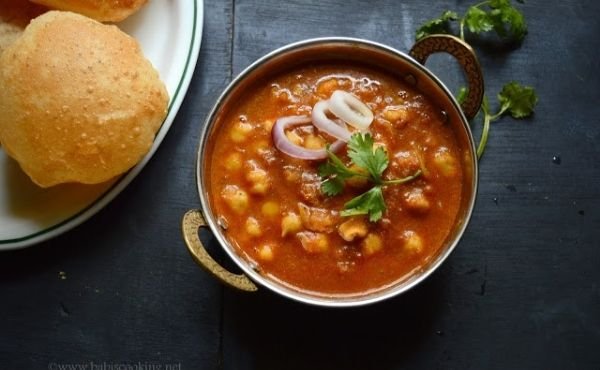
Punjabi Chole
Chickpeas Curry
Punjabi chole masala or chana masala is one of the most popular curry dishes from India. In fact in north India no wedding or party is complete until you have chole masala on the menu. I remember whenever we would call someone over for lunch or dinner, mom would almost always make chole.Punjabi chole masala or chana masala is one of the most popular curry dishes from India. In fact in north India no wedding or party is complete until you have chole masala on the menu. I remember whenever we would call someone over for lunch or dinner, mom would almost always make chole.
So what actually is chole masala? In this recipe, chickpeas are cooked with onions, tomatoes and lots of spices. A special blend of spices called “chole powder/masala” is easily available at every Indian store. One can make chole masala powder at home too by dry roasting ingredients like cumin, cloves, coriander, peppercorn, cardamom etc. But I usually get the masala from the store, saves me time and also tastes good.
My husband loves chole, well that’s given since he is a punjabi. So after I got married I really tried to master making punjabi chole and after lots of trials and errors, I think I have now found the perfect recipe. Hubby feels that I make the best chole, maybe he’s just biased but at least that make me pretty confident about this recipe.
You will notice that I added 2 tea bags while cooking chickpeas in the pressure cooker, that’s because the tea bags help in giving chole a dark brown/black color. I added only 2, but for a deeper darker brown color, you can add more tea bags. And before you start wondering, let me assure you that the tea bags do not hamper the taste of chickpeas in any way.
Ingredients
To pressure cook
• 2 cups + 2 tablespoons raw chickpeas
• 5-6 green cardamom pods
• 4-5 black peppercorn
• 2 bay leaves
• 2 cinnamon sticks
• 2 tea bags
• Salt to taste
• 5 cups water
For the chole masala
• 1 tablespoon oil
• 3-4 cloves
• 3/4 cup pureed onion from 2 small onions
• 2 teaspoons ginger-garlic paste
• 2.5 cups pureed tomatoes from 4 medium tomatoes
• 3 teaspoons chole masala
• 1/2 teaspoon red chili powder or to taste
• 1/2 teaspoon paprika powder
• 3/4 teaspoon cumin powder
• Salt to taste
To garnish
• 1 tablespoon ghee
• 1 inch ginger cut into julienne
• 1/4 teaspoon garam masala
• 1/2 tablespoon crushed kasuri methi also known as dried fenugreek
leaves
• 2 tablespoons chopped cilantro
Instructions
1. Soak the chickpeas overnight in enough water to cover them. In the
morning, drain the water.
2. In a pressure cooker add the soaked and drained chickpeas, 2 tea
bags, bay leaves, cardamom, cinnamon stick, salt and 4 to 5 cups water.
Pressure cook at high flame till you get 1-2 whistles. After that lower
the flame to medium and let the chickpeas cook for another 10-12
minutes.
3. In a wok, heat 1 tablespoon of oil. Once hot, add cloves and grated
onions. Fry the onions till the raw smell goes away and they are light
golden brown in color.
4. Add ginger-garlic paste and cook for 3-4 minutes till the smell of
ginger-garlic goes away.
5. Now add the tomato puree , stir and let it cook for 12-15 minutes on
medium-low flame. Cover the pan to prevent the splash all around.
6. Add the chole masala, red chilli powder, paprika powder, cumin
powder, salt and mix for a 1-2 minutes.
7. Add the chickpeas next and stir will all the chickpeas are coated
with the spices, around 2 minutes.
8. Add water (which was used for boiling the chickpeas), cover the pan
and let it simmer at medium-low flame for around 30 minutes. The gravy
will thicken after 30 minutes so add water accordingly.
9. To temper, heat 1 tbsp of ghee in a pan and the ginger julienne to
it.
10. Fry till the juliennes are golden brown in color but do not burn
them. Add to the chole curry, mix and switch off the flame.
11. Sprinkle some garam masala, kasuri methi and garnish with chopped
coriander leaves.
12. Serve with roti, paratha or plain rice.
Notes
1. Skip the ghee in the tempering to make this vegan.
2. To cut short the process of soaking chickpeas overnight, use canned
chickpeas which are easily available at grocery stores. The canned ones
can be prepared immediately and do not need to be soaked overnight.
3. Adjust the amount of red chili powder in the recipe to taste.
4. Patience is something you will need while cooking chole or any such
Indian curry. Of course, I can make it in a quicker way by adding
everything in the pressure cooker. But if you let the tomatoes and
onions cook really well and then simmer the chickpeas with the spices
for a longer time, the taste would be much much better.
5. I like to keep the chole masala gravy on the thicker side, for a
thinner gravy add more water.
6. Chole masala actually tastes the best 1 day after you make it because
the spices are then better incorporated into the chickpeas.
7. Chole freeze well. Let the curry come down to room temperature, store
in an airtight container and freeze.
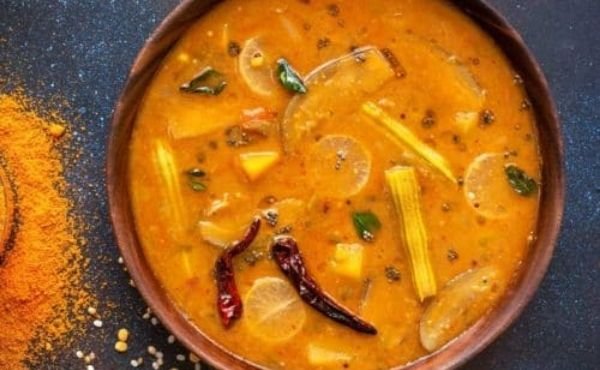
Sambhar Msala
Sambar – south Indian lentil stew made with vegetables, lentils and a special blend of spices.
It’s best enjoyed with rice, idli or dosa. Don’t let the list of ingredients intimidate you, it’s actually easy to put together!
When we eat South Indian food in restaurants, my focus is always more on the sambar and chutneys than the idli and dosa.
Sure, I love my idli and dosa but a good sambar and chutney makes all the difference in my opinion.
Unfortunately, most of the restaurants here make really bad sambar. It’s usually tasteless and lacks flavor. So I compensate for the lack of it by making a good sambar at home.
My sambar recipe is pretty basic and straight forward. I don’t use a ton of veggies either but I can promise that this make a good basic sambar.
What is Sambar
Sambar is a lentil and vegetable stew, most popular in South India.
Even though I am not south Indian, I have always loved it as far as I can remember. So, I guess it’s safe to say it’s popular all across India.
Here are the key ingredients required to make a sambar.
Ingredients
To Pressure Cook the Dal
• 1 cup toor dal/arhar dal pigeon peas lentil
• 1/2 teaspoon turmeric powder
• 1 teaspoon salt
• 3 cups water 24 oz
Tamarind Juice
• 1 tablespoon tamarind piece
• 1/3 cup hot water
For Cooking The Vegetable
• 2 teaspoons oil
• 1/2 cup chopped eggplant
• 2 medium carrots diced
• 7-8 drumsticks I used frozen ones that I got from Indian store
• 1/2 teaspoon salt adjust to taste
• 1 medium tomato chopped
• 3 cups water 24 oz
• 2 tablespoons sambar powder homemade or store bought, adjust to
taste
• 2-3 teaspoons powdered jaggery
• 1/2 teaspoon kashmiri red chili powder optional
Tadka/Tempering
• 1 tablespoon ghee or use oil
• 3/4 teaspoon mustard seeds black
• 1/4 teaspoon hing (asafoetida)
• 10-15 curry leaves
• Chopped cilantro to garnish
Instructions
1. To a pressure cooker, add the rinsed dal with 1/2 teaspoon turmeric,
1 teaspoon salt and 3 cups (24 oz) of water. Cook for 5 whistles on
medium-high flame, then lower the heat to medium-low and let it cook for
another 5 to 6 minutes. Once the pressure releases naturally, open the
cooker and mash the cooked dal lightly with a potato masher. Set aside.
If using an Instant Pot, pressure cook for 9 minutes on high pressure
with natural pressure release.
2. Meanwhile soak 1 tablespoon tamarind piece in 1/3 cup of hot water
for 15 to 20 minutes. Then strain the liquid using a strainer. You will
get 3 to 4 tablespoons of tamarind water/juice. Set it aside.
3. In a pan, heat 2 teaspoons oil on medium heat. Once the oil is hot,
add the chopped eggplant and cook for around 2 minutes.
4. Add carrots and frozen drumsticks and 1/2 teaspoon salt and cook for
2 more minutes. Add the chopped tomato and cook for 1 minute.
5. Then add around 3 cups (24 oz) water and stir.
6. Add 2 tablespoons sambar powder (or adjust to taste). Also add
jaggery powder, and 4 tablespoons of the tamarind water that you had
extracted earlier.
7. Stir in the cooked dal. Also add the kashmiri red chili powder, if
using.
8. Stir everything together and let the sambar simmer on medium heat for
5 to 6 minutes.
9. For the tempering, heat 1 tablespoon ghee (or oil if you want to keep
this vegan), in a small pan on medium heat.
10. Once the ghee is hot, add mustard seeds and let them pop. Then add
the hing and curry leaves for stir for few seconds until leaves turn
crisp.
11. Pour tempering over the simmering sambar.
12. Serve the sambar hot with idli, dosa or rice!
Notes
1. Use oil in place of ghee in the final tadka to make this recipe
vegan.
2. You can also use a mix of toor and moong dal to make this sambar.